Introduction
Students will learn the cultural perspectives behind the artwork from three different Spanish art movements.
Welcome to the Spanish Art Mystery WebQuest! During this assignment, you will learn about artistic movements throughout the history of Spain and use your knowledge to identify works of art by their movement and draw conclusions about the cultural perspectives that informed them.
Task
A treasure trove of priceless art has been discovered in an apartment in Spain. You are an art detective and you have been asked to figure out what time period and cultural perspectives influenced three different works of art.
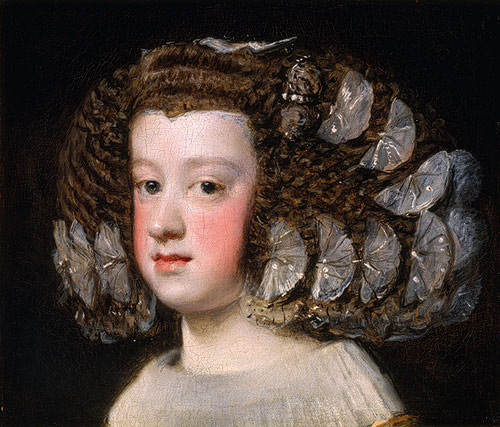
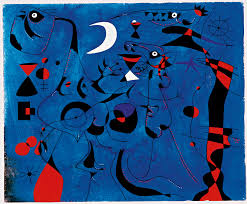
_47.jpg)
ONE: Read through the materials under the Process tab, learning about different artistic movements in Spanish history.
TWO: Create a presentation in Spanish for the art community that identifies each painting by its artistic movement and justifies your conclusion. Then, provide a theory about a cultural perspective, or underlying reason, behind each painting or movement. The second part of the presentation does not have to be in Spanish.
Process
1. Look over the following sources to learn more about Spanish artistic movements.
Overview
[video:https://youtu.be/Qr4lLuBYYXo width:500 height:427 align:center]
Baroque
http://www.visual-arts-cork.com/history-of-art/spanish-baroque-artists.htm
http://academics.smcvt.edu/awerbel/Survey%20of%20Art%20History%20II/Baroque.htm
Romanticism
http://www.visual-arts-cork.com/history-of-art/romanticism.htm
http://www.spanisharts.com/history/del_neoclasic_romant/i_romanticismo.html
Surrealism
http://www.visual-arts-cork.com/history-of-art/surrealism.htm
2. Look at the three paintings from the treasure trove. Identify characteristics you see in the paintings that you learned about when studying the given materials. Then, using your best judgment, match the paintings to the art movement you think it belongs to. Finally, using what you know about Spanish history, identify a cultural perspective that could have influenced each painting or its artistic movement. In other words, look at one aspect of each painting and answer this question: "What cultural beliefs, traditions, norms, or events could have influenced the artist to portray that aspect?"
3. Use PowerPoint or Prezi to prepare a presentation of your findings. Identify artistic movements and justify your conclusions in Spanish. You can provide your cultural perspective insights in English.
Evaluation
|
|
Exceeds Expectations 4 Points |
Meets Expectations 3 Points |
Progressing 2 Points |
Does Not Meet Expectations 1 Point |
|
Use of Spanish |
Clear, easy to understand, few vocabulary / grammar errors |
Mostly clear, easy to understand most of the time, some vocabulary / grammar errors |
Approximately half clear, mildly difficult to understand, patterns of vocabulary / grammar errors |
Unclear, hard to understand, many vocabulary / grammar errors |
|
Quality of Content – Artistic Movements |
Information is accurate and has ample justification |
Information is accurate and has adequate justification |
Information is somewhat accurate and has some justification |
Information is inaccurate and has little to no justification |
|
Quality of Content – Cultural Perspectives |
Evaluation is well thought-out and insightful |
Evaluation is thorough and logical |
Evaluation is somewhat thorough and somewhat logical |
Evaluation is nonexistent or incomplete, arguments are illogical |
|
Quality of Presentation |
Presentation is highly organized and intuitive, speech and visual aids flow seamlessly, product is appropriate for intended audience |
Presentation is organized, speech and visual aids are coordinated, appropriate for intended audience |
Presentation is somewhat disorganized, visual aids and speech are not well coordinated, is not well-suited for intended audience |
Presentation is disorganized, visual aids are missing, inappropriate for intended audience |
Conclusion
I hope that you learned a lot during this Webquest. This project will hopefully help you understand connections between cultural products, like art, and the perspectives that influence them. In addition, it should prepare you for research projects in the future.
Extension: Choose one of the studied artistic movements. Use a digital camera to take photos of architecture, sculpture, and other types of art around campus or your town that contain elements of the artistic movement you chose. Arrange your photos creatively in an album alongside images of art from that movement that contain similar elements. Include captions in Spanish that point out your comparisons. You will present your albums in one-on-one Spanish conversations and then you will turn them in for teacher assessment. You will be graded on quality of the album, quality of content, and quality of your Spanish conversation.