
Introduction
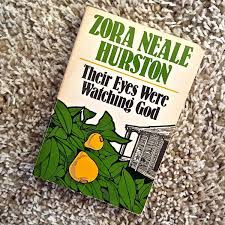 In this Webquest, students will be exploring the meaningful content within Zora Neale Hurston's novel Their Eyes Were Watching God. They will specifically look at the way Hurston employs symbols, metaphors, and figurative language in her novel, therefore obtaining a deeper understanding of the book's thematic implications.
This Webquest is designed for a twelfth-grade interdisciplinary unit on Zora Neale Hurston's Their Eyes Were Watching God. As discussed throughout previous class discussions, Hurston's novel is an example folklore that depicts life in the 1930s--a life strewn with poverty and economic depravation due to the effects of The Great Depression. As a class, we have explored how music can capture the culture of life in the thirties. We have also explored the history surrounding folklore and folk language. Now, it is time to delve deep into the novel and explore the figurative language, symbolism, and metaphors that Hurston employs throughout her novel. The assignments throughout this Webquest will be reflective of your understanding of the text, which you should have read over the course of last month, as well as your ability to synthesize your own ideas and our in-class discussions with additional online resources to be researched throughout this Webquest. The ultimate focus of this Webquest is to ensure that you are able to make connections between the literary devices employed in the text and how they contribute to the overall theme for Hurston's novel.
As an introduction to this Webquest, students are asked to click on the youtube link below, as it sets the stage for what is to come in Hurston's fictional masterpiece.
[video:http://www.youtube.com/watch?v=uN1qUeId]
Task
The focus of the task is to identify and be able to explain the symbolism, metaphors, and figurative language in Hurston's novel Their Eyes Were Watching God. In order for students to reach an understanding of the meaning behind Hurston's use of symbolism, metaphor, and figurative language, students will be given a series of websites that provide contextual information and sources about Zora Neale Hurston and her novel. The students are expected to read each source carefully, and take notes on a separate sheet of paper as they read. Through exploring different sources and critic reviews, students will be able to...
1) Identify Hurston's purpose for employing a segregatated, racially dispared setting for her novel.
 2) Evaluate the extent to which Hurston uses metaphors throughout the novel that are suggestive of life int he 1930s
3) Explain the symbolic imagery throughout the novel, paying particular attention to the pear tree that Janie often references in the novel.
4) Provide varoius examples of figurative language that Hurston uses in her novel, as well as the third person omniscient narrator.
This Webquest will culminate into a Socratic seminar two weeks from today. The seminar will allow the teacher to utilize a method of differentiated instruction in order to assess the students. Along the way, students will be using online sources to conduct research that will aid in an ultimate presentation during our Socratic Seminar. During the seminar, students may present their findings in the form of a Nearpod, poster, or iMovie. Additionally, students will present their findings in the form of an explanatory essay, no shorter than 3 pages to the teacher (works consulted page not included). *This Webquest is designed to take one week to complete. The students are to begin this Webquest in class and finish it outside of class. Upon completion of the Webquest, the students will have one week to prepare for our Socratic Seminar, where they will be presenting their findings through whichever presentation medium they choose. They students are granted an additional week to prepare a mandatory essay to be handed into the teacher. Each presentation (Socratic seminar and essay) will be scored out of 25 points, and then multipled by two to determine a grade out of 100. This assignment will count for a test grade.
Process
Task 1:
In order to gain an enhanced understanding of the symbols, metahpors, and figurative language in Zora Nealhe Hurston's Their Eyes Were Watching God, you will need to explore the historical context/background infromation of the story. You will need to click on two of the many links listed below, and read the content of the corresponding links. As you read, take notes on a separate sheet of paper, or in your notebooks. Additionally, after you read two articles of your choosing, you are required to provide answers to the three questions listed below per website. You will need to incorporate your responses to these questions within your essay and/or Socratic Seminar presentations. You must use two of the links below; please do not use links that are not provided below, as these were chosen to help you specifically!
[http://www.womenwriters.net/editorials/hurston.htm]
[http://www.biography.com/blackhistory/harlem-renaissance.jsp]
[http://memory.loc.gov/ammem/today/jan07.html]
[http://zoranealehurston.com/about/]
After you have carefully read the content fostered within two of these links, answer the following three questions per website that you clicked on. By the conclusion of ask 1, you should have a total of 6 responses.
Question 1: What is the writer's message in this article?
Question 2: What does this article suggest about life in the 1930s, and by extentension, the life of Zora Neale Hurston?
Question 3: How might this article be useful in understanding the segregation fostered by The Great Depression?
Task 2:
Time to discuss metahpor! For purposes of our Socratic Seminar, the primary metaphor that you will need to explore is the pear tree in the novel that Janie consistently references everytime she enteres a new "phase" in her life. Each of you will analyze the same article in order to reach a new understanding of the pair tree's metaphoric implications. As you read the article, please take notes on a separate sheet of paper, or in your notebooks. Once again, you will be asked to answer three questions upon your reading of the article, which you will need to reference in your essay and/or Socratic Seminar presentations.
[https://astheywatched.wordpress.com/symbolism/]
Question 1: Why does the author claim that the most important symbol in Hurston's novel is the pear tree?
Question 2: Do you agree or disagree when the writer claims that the pear tree indicates "Janie's blossoming love?"
Question 3: According to the author of this article, how does the pear tree reflect Janie's love of aestethics?
Task 3:
For this task, you will be asked to explore the figurative language and resulting imagery that Hurston creates in her novel. You will notice that much of the figurative language in the novel is provided by the the third person omniscient narrator. Hurston provides visually descriptive details about Janie, which she conveys using figurative language expressed by a third person narrator. Therefore, for this task, it is important to explore figurative language as a medium for Hurston's use of imagery. You will be asked to answer three questions from your reading of the content fostered by the links listed below. Please take notes as you read, because you will need to reference them in your essay and/or Socratic Seminar presentations.
*you do not need to read this entire document. Only focus on the abstract, chapter 1, and chapter 6.
Question 1: How does the writer believe that Hurston's use of figurative language is telling of African-American life in the 1930s?
Question 2: Why does the author believe that Janie's hair, referenced in chapter 6, is the most powerful imagery in the novel?
Question 3: What is the main connection that the author establishes between figurative language and imagery?
Well Done! Be sure to put your notes in a safe and secure place, so you may reference them as you prepare for your upcoming assignments.

Evaluation
Students will be graded using a rubric, scored out of 25 points. The same rubric will be used to grade students on thier in-class presentations and their essays. The maximum amount of points students can recieve for this assignment is 50.
|
Score Point |
5: Consistent and near perfect; few or no flaws present |
4: Consistent though not necessarily perfect; many strengths and few flaws present |
3: Reasonable control; some strengths and some weaknesses |
2: Inconsistent control: more weaknesses than strengths present |
1: Little or no control whatsoever; minimal attempt |
||||
|
Central Idea |
Sharply focused central idea
Utilized the Webquest well to help formulate a central idea |
Very focused central idea
Utilized the Webquest sufficiently to help formulate central idea |
Somewhat focused main idea
Utilized the Webquest moderately to help formulate central idea |
Barely focused main idea
Utilized the Webquest minimally to help formulate central idea |
Unfocused main idea
Did not utilize the Webquest to formulate central idea |
||||
|
Use of the evidence from the Webquest links and response to the prompts posed on the Webquest |
Includes ample, well chosen evidence from Webquest links and articles to support central idea
Evidence and ideas clearly and thoroughly developed
Relevant, specific, and accurate details |
Includes much well chosen evidence from Webquest links and articles to support main idea
Evidence and ideas adequately developed
Majority of details relevant and accurate |
Includes some well chosen evidence from Webquest links and articles to support main idea
Evidence and ideas somewhat developed
Most details relevant and accurate |
Includes insufficient evidence from Webquest links and articles to support main idea
Evidence and ideas barely developed
Some relevant and accurate details |
Includes no little to no evidence from Webquest links and articles to support main idea
Evidence and ideas not developed
Little to no relevant and accurate details |
||||
|
Organization |
Evidence of planning and logical order to easily move through the composition or presentaion Clear beginning, middle, and ending
Effective transitions |
Some evidence of planning and logical order to move through the composition or presentation Has a beginning, middle, and ending
Moderate Transitions |
Attempt of organization in the composition or presentation
Adequate beginning, and ending
Somewhat effective transitions |
Little to no attempt of organization in the composition or presentation
Weak beginning and ending
Lacks transitions
|
Random order of composition or presenation
No beginning or ending
Difficult for the reader to move through the response |
||||
|
Proper spelling and grammar; no mistakes . Infromation effectively conveyed in a concise manner
|
Proper spelling and grammar; few mistakes Infromation moderately conveyed in a concise manner |
Some spelling and grammar mistakes Information conveyed in a somewhat concise manner |
Many spelling and grammar mistakes Information conveyed in a way that is barley concise |
Little to no command of language
Infromation is not concise and inapplicable to assignment |
Conclusion
Congratulations! You have successfully completed your first Webquest! Although this Webquest may have been a challenge for many of you, remember that challenges are invaluable experiences, and will help prepare you for greater obstacles. 
Now that you have gathered all of your wonderful research, it is time to "show off" all of your hard work! Apply your findings in your creation of your multimedia presentations for our Socratic Seminar, and your essays! I am so excited to hear about the insight you have gained from this experience!
You completed three different tasks throughout the duration of this assignment. You have demonstrated an ability to
- Read/listen for main ideas within a literary text, informational text, and sources of research
- Demonstrate the ability to analyze fiction through identifying and applying knowledge of elements (e.g., plot line structure) and literary techniques (e.g., figurative language, imagery, symbolism).
- Compare ideas between literary texts, informational texts, and online source texts.
- Evaluate and interpret an author’s point of view using evidence from the text and previously acquired knowledge from classroom work.
- Reach a new understanding of metaphor, figurative language, and symbolism through complex research
- Use technology, including the Internet, to explore and create writing products in response to informational texts (online sources) and how they relate to a literary text (Their Eyes Were Watching God).
BRAVO!