
Introduction
Stopping The Spread of a Virus by Jad Zgheib
Grade level: Highschool students to Biology Sophomores (1st year university)
What is a virus?
A virus is a microscopic infectious non-living agent that can only replicate inside a host. Viruses can attack all forms of life, from bacteria and plants to humans and animals. Despite being non-living, viruses are present throughout the world and are thought to be the most abundant biological entity.
Why are viruses important?
Despite being a source of many diseases, viruses play many important roles in our world, and understanding them is essential for many aspects. Some of the importance of viruses:
1. They might cause mutations essential for a species' evolution.
2. They play a role in the ecological balance of the globe.
3. They can be used for biomedical research and the generation of vaccines.
4. They can be used to genetically engineer treatments of diseases and manipulate animal and plant species.
That being said, to fully grasp the ideas of viruses and understand them, consider the following story:
On a distant island, in a small town, a new mysterious virus became the talk of the town. Multiple cases were reported, and the numbers are on the rise. Hospitals are getting overwhelmed, and no cure has yet to be found. Afraid of the start of a new pandemic, the town's mayor calls you to help the desperate health care system. Your goal is to investigate the virus, identify its type, transmission, prevention techniques, and finally its potential cures.

Task
Powerpoint presentation:
For this webquest, you are required to create a PowerPoint presentation that is at most 20 minutes long in order to explain the following aspects of viruses in your own interactive way:
1. How did you manage to find the type of the virus?
2. How are you going to track its transmission?
3. What guidelines are you going to give to the townspeople to prevent the further spreading of the virus?
4. What is your treatment plan?
Process
What to include?
Identifying the virus:
As a first step, you should investigate the different types of viruses in order to understand their function. As we all know, structure determines function, and so, by determining the shape and type of the virus, you can predict its mode of action. Differentiate the viruses based on the following: RNA or DNA, capsid or no capsid, family and genus, shape, size, and genome shape.
Source:
https://my.clevelandclinic.org/health/body/24861-virus
❌ Photo unavailable
Spreading of the virus:
For your next step, and after determining the different aspects that affect the mode of action of viruses, you can now move on to understanding the modes used by this virus to spread and transmit from one organism to the next.
Source:
https://www.sterillium.info/en/stories-hub/how-do-viruses-spread

Stopping the spread:
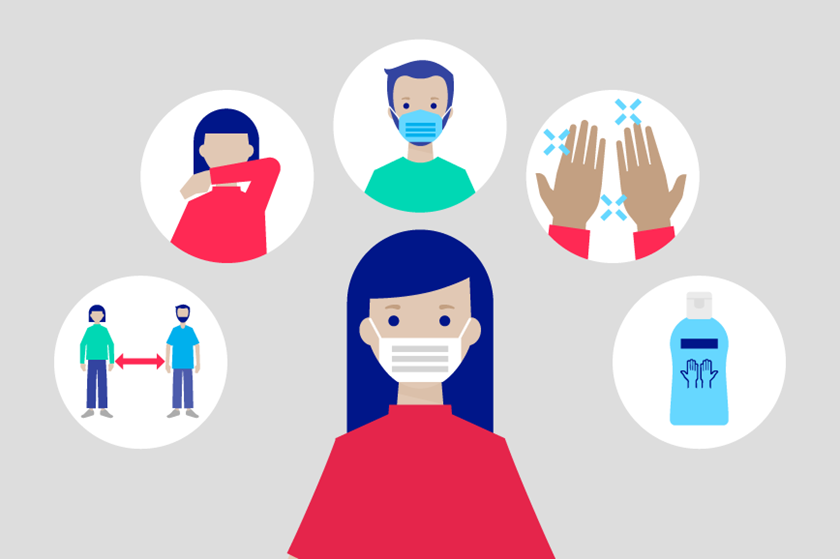
The next step in tackling the virus is slowing it down. Since viruses are usually fast spreading, in order to control them then you should stop their spreading so you can find a proper treatment. Thus, it is important to tackle prevention techniques to stop the transfer of the virus between the townspeople. By reviewing these two sites, you can find the different ways to prevent the spread of the virus.
Source:
https://www.medicalnewstoday.com/articles/327167#Phage-therapy (Use the article titled "What practices slow the spread of viruses?")
https://my.clevelandclinic.org/health/diseases/24473-viral-infection
Beating the virus:
The final step in tackling viruses is developing an effective treatment plan that can alleviate the symptoms caused by the virus. Review the following source to find how different viruses can be best treated.
Source:
https://my.clevelandclinic.org/health/diseases/24473-viral-infection

Powerpoint:
Finally, create a PowerPoint presentation including all of the data that you have collected about the virus. Illustrate them in an interactive way, where you talk about all viruses in general and then you choose one of them to tackle as in the story of the town. In your presentation, include any media that might ease the explanation process (images, videos, graphics...). Make sure to use a clear font as you will take the job of a biology teacher explaining viruses. Your presentation should not exceed 20 minutes.
Evaluation
This assignment has a total grade of 75 points divided as follows:
Information (25pts):
|
The information you have presented is factual and close to reality |
12.5 |
| The information you have presented is related to the topic | 12.5 |
Presentation (50pts):
Organisation (25pts):
| Title page including your name and title | 5 |
| Logical flow of ideas |
5 |
| No repetition and unnecessary information | 5 |
| Clear font and colors | 5 |
| Citation page | 5 |
Presenting (25 pts):
| Thorough understanding of the material presented |
5 |
| Presented in the time frame (20 minutes or less) | 5 |
| Well prepared and ready to answer questions |
5 |
| Ability to keep the audience interested | 5 |
| Ability to explain and relate the topic to the story of the town | 5 |
Conclusion
In conclusion, you have now participated in one of the sectors of biology: Virus study and prevention, also known as pathology. By engaging in this assignment you have grasped the magic behind the work done by scientists, doctors, health officials, and governments to work as a whole big system and prevent the spread of such pathogens while maintaining the safety of their citizens.
This WebQuest primarily aims to help you understand viruses by dealing with one, through the study of the virus you are now able to know how different types of viruses can manipulate the human body and ensure its transmission. It also helps you understand the techniques behind dealing with these viruses through prevention and medical intervention.
Being knowledgeable about such topics is important for your future as a biologist. Biology is all about the small particles that make up our world. We are nothing but a sum of cells, and each one of those cells is as important as the other in ensuring our survival.
Credits
Sites:
How do viruses spread? Sterillium® - Home. (2024, March 11). https://www.sterillium.info/en/stories-hub/how-do-viruses-spread
MediLexicon International. (n.d.). Introducing “good” viruses: The bacteriophage. Medical News Today. https://www.medicalnewstoday.com/articles/327167#Phage-therapy
professional, C. C. medical. (2024, May 1). Viruses: What they are & how they work. Cleveland Clinic. https://my.clevelandclinic.org/health/body/24861-virus
Viral infection: Causes, symptoms, tests & treatment. Cleveland Clinic. (2024, May 1). https://my.clevelandclinic.org/health/diseases/24473-viral-infection
Images:
Art Factory. (n.d.). Village painting - CP-103 [Image]. Art Factory. https://www.artfactory.in/product/2175/Beautiful-Village-Painting
Centers for Disease Control and Prevention (CDC). (2024). COVID-19 treatment for healthcare providers [Image]. CDC. https://www.cdc.gov/covid/treatment/index.html
Financial Times. (n.d.). Image of financial content [Image]. Financial Times. https://www.ft.com/content/42d6d093-868e-4cc9-828a-0b19d09977af
iStock. (2020). Bacteria and virus icons: Disease-causing bacterias, viruses, and microbes [Digital image]. iStock. https://www.istockphoto.com/photo/bacteria-and-virus-icons-gm1219489320-1219489320
Sterillium. (n.d.). How do viruses spread? [Image]. Sterillium. https://www.sterillium.info/en/stories-hub/how-do-viruses-spread