
Introduction
Picture the consequences of a world in which the oceans cease to exist. The loss of those vibrant and vital water bodies, our planet’s most beautiful and potent regulators, would destroy the natural balance that nurtures and sustains us all. In other terms, this would be equivalent to the Earth losing its lifeblood and lungs which would leave drastic effects on every creature and process.
❌ Photo unavailable
Marine ecosystems are the animating force of our planet, with oceans covering more than 70% of the Earth’s surface. They host a variety of organisms ranging from microscopic beings to some of the largest discovered animals. These dynamic regions are very important for the biodiversity and well-being of our environments since their health correlates with many indispensable effects on our lives. Climate stability, oxygen supply, global economies, wild-life, human health, and many more aspects of life will all be hindered if our marine ecosystems suffer. Yet, we are closer than ever to destroying these habitats and reaching a dark tunnel of consequences that could lead to global crises. Human ignorance and intervention pose a huge threat to marine ecosystems’ persistence.
In this WebQuest, you are an underwater research scientist that will dive through some of the roles of marine ecosystems and the dangers they withstand in today’s world. Consider this WebQuest a chance to respond to the oceans’ call for help by getting introduced to their reality and significance. Since education is the key to resolving such topics, this activity will contain beneficial information and take you on a journey to explore the world of marine ecosystems.

Task
The first step is to understand and identify key information on the significance and challenges of marine ecosystems through effective research and exploration of the provided websites. It is important to show a true understanding of the topic while presenting, and to be capable of answering questions that the audience may have.
Your task will be to work in pairs to present your findings. The presentation should be a digital PowerPoint presentation illustrating the key points to reflect your understanding and results.
Outline for the presentation (25-30 slides):
Introduction:
-Introduce the topic and give a brief introduction on the points that you will discuss.
Key Points
-Make sure to cover all the key concepts highlighted in the ''Process'' section and provide examples.
Conclusion:
-Briefly restate the main points and give your interpretations in a conclusive manner.
The PowerPoint should also include images and should not exceed 30 slides.
❌ Photo unavailable
Process
Part I-Research and Information Collection
The questions to investigate are:
1. What constitutes marine ecosystems?
The major points to address are the components of marine ecosystems, both biotic and non-living, and how the latter interact with one another to form these complex habitats.
Kindly use this website as the source of information for this question: https://microbenotes.com/marine-ecosystem-components/

2. Why are marine ecosystems important to human lives?
The area of focus is how humans benefit from marine ecosystems and the services they provide to balance and enhance human lives. Several examples are present, briefly mention them and pick four services to discuss in a more detailed manner.
This YouTube video illustrates the interconnectedness between humans and oceans:
In addition, the following website further explains the benefits with more details: https://ocean.org/education/the-ocean-and-humans-are-connected/
3. How do marine ecosystems help the global climate?
The key point is to perceive how marine ecosystems impact the world as a whole, on a large scale, through their regulation of global climate.
Their contributions to the climate are explained through the following website: https://www.lse.ac.uk/granthaminstitute/explainers/what-role-do-the-oceans-play-in-regulating-the-climate-and-supporting-life-on-earth/#:~:text=The%20world's%20oceans%20cover%20most,around%2090%25%20of%20excess%20heat.
4. What are some of the main threats that marine ecosystems face because of human activities?
This aspect focuses on the most challenging dangers that they face due to human intervention and the extent of these threats. Several examples will be provided, choose three of them to delve deeper into. (Marine plastic pollution will be discussed alone after, so the three examples should be of other dangers).
Information source:
https://www.ecowatch.com/marine-life-ocean-threats.html
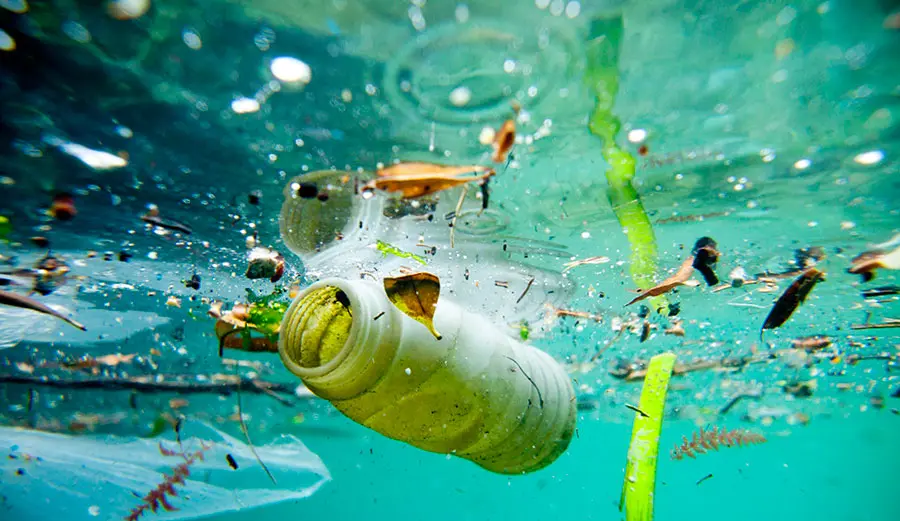
5. As the major human-induced threat, where will marine plastic pollution lead our planet to?
Marine plastic pollution is a problem that we contribute to on the daily basis. This example provides a good link between the topic and our everyday lives. The purpose of this question is to understand the reality of this aspect and its impact on both humans and oceans. It's like a loop in which what we do ends up being what we consume and live with.
This Ted Talk provides a good insight into the threat:
This website also focuses on marine pollution's effect on human health:
https://www.sciencedirect.com/science/article/abs/pii/S0025326X06002918
6. How can we help marine ecosystems?
The purpose is to explore many ways to help limit the destruction and prevent its drastic outcomes. This website provides several methods for marine conservation: https://www.marinebio.org/conservation/local/
In addition, the organization behind this link, called Oceana, has several campaigns aimed at saving marine ecosystems. Look through a few examples to take an idea on different initiatives and the progress in the matter.
Part II-PowerPoint Guide
The PowerPoint should be well-structured and should include images as visual aids. Here are some tips to create an effective PowerPoint.
The following website provides tips related to the structure of the slides, the font to use, and more: https://www.ncsl.org/legislative-staff/lscc/tips-for-making-effective-powerpoint-presentations
In addition, this video demonstrates how to insert images and use them as a background: https://youtu.be/ZATzJA4fd4o
Evaluation
The grade distribution will be based on the following:
I. Content (45%):
| Criteria | Expectations | Percentage |
| Accuracy | The information is accurate and well-supported. | 25% |
| Key Points | All the main points discussed are present. | 10% |
| Flow of Ideas | The information follows a clear pattern. | 10% |
II. Structure (30%):
| Criteria | Expectations | Percentage |
| Visual Aids | The PowerPoint includes images and backgrounds. | 15% |
| Structure | The slides are well-structured and contain a precise amount of information. | 15% |
III. Oral Presentation (25%):
| Criteria | Expectations | Percentage |
| Clarity and Preparedness | The presenters are well-prepared and reflect a deep understanding of the topic. | 15% |
| Engaging with the audience | The presenters appeal to the audience and are ready to answer any follow-up questions. | 10% |
Conclusion
The marine explorer Yves Cousteau once said, “The sea, once it casts its spell, holds one in its net of wonder forever.” Marine ecosystems are not just about marine organisms, they share an irreducible connection to human life and the health of Earth.
To wrap it all up, through this WebQuest, you have explored the diverse world of marine ecosystems, its contributions, and the threats it needs to be rescued from. This WebQuest has highlighted the complexity of such habitats, and provided significant information that would help in better understanding the topic. Education is the key to a healthy planet, and hence, it is important to expand our horizons on the habitats that constitute the majority of it.
Good luck with your research, and hopefully you find interest in delving through this topic!

Credits
APA Citations:
I. Websites:
Sherpa, N. (2024, August 26). Marine ecosystem and its abiotic and biotic components. Microbe Notes. https://microbenotes.com/marine-ecosystem-components
Newton, R. (2022, January 17). The ocean and humans are connected. Ocean Wise. https://ocean.org/education/the-ocean-and-humans-are-connected
Robinson, E. (2023, February 28). What role do the oceans play in regulating the climate and supporting life on Earth? Grantham Research Institute on climate change and the environment. https://www.lse.ac.uk/granthaminstitute/explainers/what-role-do-the-oceans-play-in-regulating-the-climate-and-supporting-life-on-earth/#:~:text=The%20world's%20oceans%20cover%20most,around%2090%25%20of%20excess%20heat.\
Polgar, J. (2017, August 8). Tips for making Effective PowerPoint Presentations. NCSL. https://www.ncsl.org/legislative-staff/lscc/tips-for-making-effective-powerpoint-presentations
L.E. Fleming (2006). Oceans and human health: Emerging public health risks in the marine environment. Science Direct. https://doi.org/10.1016/j.marpolbul.2006.08.012
Bennett, P. (2022, October 28). Marine Life and Ocean Threats 101: Everything You Need to Know. EcoWatch. https://www.ecowatch.com/marine-life-ocean-threats.html
101+ ways to make a difference. MarineBio Conservation Society. (2023, September 28). https://www.marinebio.org/conservation/local
Oceana campaigns. Oceana. (2024, September 10). https://oceana.org/campaigns
II. YouTube Videos
Inspire Education. (2022, May 20). How do humans use oceans? [Video]. YouTube. https://youtu.be/okfcJ0XUDPE
Ted Talks. (2018, April 3). A drop in a plastic ocean: how one person can make a difference. [Video]. YouTube. https://youtu.be/3UqkgRGPqsk
Tutorials 4 View. (2021, Jan 29). How to add a background image to a PowerPoint 2019 Slide. [Video]. YouTube. https://youtu.be/ZATzJA4fd4o
III. Images
Grafner, (2016). Colorful coral reef with many fishes [Photograph]. iStock. https://www.istockphoto.com/photo/colorful-coral-reef-with-many-fishes-gm508960998-85537261
Watt, J. (2019). School in great numbers at Rapture Reef, French Frigate Shoals, Papahānaumokuākea National Marine Monument. [Photograph]. NOAA Education. https://www.noaa.gov/education/resource-collections/marine-life/coral-reef-ecosystems
Azzam (2023). Cartoon Girl in Business Attire Presenting A Presentation On A Flip Chart. [Digital Image]. FreePik. https://www.freepik.com/premium-ai-image/cartoon-girl-business-attire-presenting-presentation-flip-chart_74994635.htm
Lober, D. (2021). Ocean Plastic Pollution. [Photograph]. Reuse This Bag. https://www.reusethisbag.com/articles/countries-that-pollute-most-ocean-plastics
Tanoshii, A. Vibrant Coral Reef Teeming with Marine Life on Earth Day. [Digital Image]. FreePik. https://www.freepik.com/premium-ai-image/vibrant-coral-reef-teeming-with-marine-life-earth-day_159296833.htm
Pizarro, R. (2015). Marine Life-Inquiry. [Quoted Photograph]. Haiku Deck. https://www.haikudeck.com/marine-life---inquiry--education-presentation-QF75otzLqr
IV. Create WebQuest:
Create webquest: Create a WebQuest: Simple. quick. free. Create WebQuest | Create a WebQuest: Simple. Quick. Free. (n.d.). https://www.createwebquest.com