
Introduction
READING RESOURCE
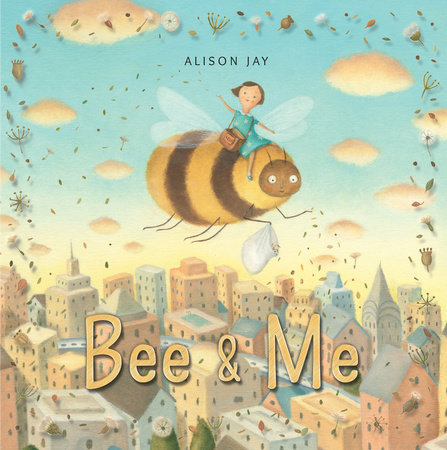
This Reading Resource is to assist the Prep/Foundation year in learning to read. The teacher resource includes five lesson plans, and focuses on two narratives, "Bee and Me" (a wordless book) and "Are you a bee?". The students are encouraged to use picture cues for comprehension in the story, "Bee and Me" and are given comprehensive tasks relative to the story. "Are you a bee" combines fiction and non-fiction to learn more about bees. Students engage in experiences which lead up to a final project, a bee mini autobiography about their own bee character. This will be displayed as a class task on the wall of the classroom, a beehive consisting of the teacher and classmates.
In the Process section of the site, the in depth lessons are provided. The Evaluation includes the assessment throughout the lessons and the Teacher Page details the Project Based Learning and Reading Support Strategies used. The Teacher page includes detail about the Cross Curriculum priorities. There is also a list of resources/references in this area.
Task
The tasks are provided in the Lesson Plans in the Process section, eg. individual and group tasks leading up to the final project.
Process
Lesson Plan 1
|
Year Level/ Class |
Foundation/Prep |
Date |
2020 |
|
Learning Area/s |
English: Language, Literature & Literacy |
Time/duration |
60 minutes |
|
Elements of the Achievement Standard targeted in this lesson Receptive Modes (Listening, reading and viewing): They understand that there are different types of texts and that these can have similar characteristics. Productive modes (Speaking, writing and creating): In informal group and whole class settings, students communicate clearly. They retell events and experiences with peers and known adults.
|
|
|
Prior learning/knowledge (previous lessons, pre-testing information, assessment data) Prior Prep formative testing, past lessons.
|
|
|
Learning Area curriculum content involved in this lesson (curriculum codes and content descriptors) Language: Text structure and organisation: Understand that texts can take many forms, can be very short (for example an exit sign) or quite long (for example an information book or a film) and that stories and informative texts have different purposes (ACELA1430) Expressing and developing ideas: Explore the different contribution of words and images to meaning in stories and informative texts (ACELA1786) Literature: Literature and context: Recognise that texts are created by authors who tell stories and share experiences that may be similar or different to students’ own experiences (ACELT1575) Share feelings and thoughts about the events and characters in texts (ACELT1783) Examining literature: Identify some features of texts including events and characters and retell events from a text (ACELT1578) Recognise some different types of literary texts and identify some characteristic features of literary texts, for example beginnings and endings of traditional texts and rhyme in poetry (ACELT1785) Creating literature: Retell familiar literary texts through performance, use of illustrations and images (ACELT1580) Innovate on familiar texts through play (ACELT1831) Literacy: Texts in context: Identify some familiar texts and the contexts in which they are used (ACELY1645) Interacting with others: Listen to and respond orally to texts and to the communication of others in informal and structured classroom situations (ACELY1646) Interpreting, analysing, evaluating: Identify some differences between imaginative and informative texts (ACELY1648) Use comprehension strategies to understand and discuss texts listened to, viewed or read independently (ACELY1650)
|
|
|
Other aspects of the 3D curriculum involved (General capabilities and Cross-curriculum priorities)
(See below and Teacher page)
|
|
|
Student diversity (differentiated approaches and/or levels of engagement)
(Teacher page)
|
|
|
Learning Intentions (could use content descriptors as starting point)
|
Success Criteria (could use the elaborations as a starting point)
|
|
Sequence of teaching and learning tasks (with time allocation) Introduction: Introduce the text, explain feelings, likes and dislikes. Explain that there are ‘wordless’ books.
Read the book and on each page discuss with the class what is happening. Describe the pages, eg. What’s happening in the picture, eg. A man typing, a lady spraying bug spray, allow students to interpret the story. Discuss the feelings, for example, why is the little girl scared of the bee flying into her room? How does the bee feel? Use picture cues to explain the storyline. (25 minutes) Divide into small reading groups and use the sample pages cards to place in the correct order of the narrative from beginning to end. This promotes discussion about the events in the book and sequence. (35 minutes) (can take the rest of the lesson. Those finished early can participate in the Bee Bots activities (programmable floor robot)
|
|
|
Evaluation of learning and next steps
|
Evaluation of teaching (pedagogy) |


|
Capabilities
Identify outcomes for each capability. Be aware that those outcomes are frequently different dimensions of the same “thing”. |
Indigenous connections, Asia connections, Sustainability and community orientation connections |
||
|
Literacy
|
Language
|
Literature |
|
|
Personal & Social Capabilities (BEING) Transformative impacts Check ACARA for descriptors
|
Identify outcomes that enable you to address the goals captured by the General Capabilities
|
Identify outcomes that enable you to address the goals captured by the General Capabilities
|
Identify outcomes that enable you to address the goals captured by the General Capabilities
|
|
“Bee and Me” introduces a different text in context, a ‘wordless’ book, without text, however students are shown through this activity that books can still have context and narrative without words and the story is still comprehensible. Interaction with others is encouraged when the teacher is reading through the book and making comments about the pages as a group, and also through the Reading groups, placing the story cards in correct sequence of events. Again, with these experiences, and with the Bee Bot extra activity, the students are encouraged to interpret, analyse and evaluate their responses when reading through ‘Bee and Me’ and placing the cards in the correct narrative order. The cards activity is creating texts, through illustrations, the Prep students are making their own interpretation of the text. Language variation and change is addressed with the use of a wordless book, this is a variant of the standard picture books the students have been exposed to. Language is used for interaction as the teacher is ‘reading’ the book and students are assisting with the narration of the story. Language is used between students to comprehend the card story. The wordless book has no text structure and organisation as there is no text, however, this is an important derivative of a text for students to learn about and using picture cues. Children are expressing and developing ideas while suggesting words for the pictures. Phonics and word knowledge is used in speaking form for these activities. Literature and context is addressed as it is displaying to the students a different form of a narrative, they are responding to this varied medium, examining and creating their own version of the story. Students are using their own personal ideas, but working as a social group as a class.
|
|||
|
Ethical & Intercultural Capabilities (BELONGING) Community relevance Check ACARA for descriptors
|
Identify outcomes that enable you to address the goals captured by the General Capabilities
|
Identify outcomes that enable you to address the goals captured by the General Capabilities
|
Identify outcomes that enable you to address the goals captured by the General Capabilities
|
|
Regarding Ethical and Intercultural Capabilities, ethics are addressed in relation to the young girl and the bee. The girl is afraid of the bee at first and captures the bee. She is then seen to read about bees and then accept the bee as a friend and help to look after it. This promotes morals, also conservation of bees. This is a relevant community aspect as bees are becoming endangered and we all need to protect them, as well as having respect for all living creatures. This is also an intercultural aspect as this involves the world, all cultures need to protect the species as it not only affects the bee’s lifespan, but production of consumer products. On a deeper level, this narrative promotes accepting differences as well. |
|||
|
Critical & Creative Thinking Capabilities (BECOMING)
Range of ideas Check ACARA for descriptors |
Identify outcomes that enable you to address the goals captured by the General Capabilities
|
Identify outcomes that enable you to address the goals captured by the General Capabilities
|
Identify outcomes that enable you to address the goals captured by the General Capabilities
|
|
These activities promote critical and creative thinking capabilities. There are no words provided in the text and the teacher is not reading the story as such, instead students are prompted to make their own story to align with the pictures. This challenges the student’s comprehension strategies, as they are responsible for the interpretation of the text. The card story activity also encourages critical thinking, individually and as part of a small group, contributing their ideas. These experiences use the processes of gathering information, abstracting (wordless, card pictures), challenging/questioning, comparing, contrasting, synthesising (using two different contexts/sources) and analysing.
|
Lesson Plan 2
|
Year Level/ Class |
Foundation |
Date |
2020 |
|
Learning Area/s |
English: Language, Literature & Literacy |
Time/duration |
60 minutes |
|
Elements of the Achievement Standard targeted in this lesson Receptive modes (listening, reading and viewing) By the end of the Foundation year, students use predicting and questioning strategies to make meaning from texts. They recall one or two events from texts with familiar topics. They understand that there are different types of texts and that these can have similar characteristics. They identify connections between texts and their personal experience. They read short, decodable and predictable texts with familiar vocabulary and supportive images, drawing on their developing knowledge of concepts of print, sounds and letters and decoding and self-monitoring strategies. They recognise the letters of the English alphabet, in upper and lower case and know and use the most common sounds represented by most letters.
Productive modes (speaking, writing and creating) Students understand that their texts can reflect their own experiences. They identify and describe likes and dislikes about familiar texts, objects, characters and events.
In informal group and whole class settings, students communicate clearly. They retell events and experiences with peers and known adults. They identify and use rhyme, and orally blend and segment sounds in words. When writing, students use familiar words and phrases and images to convey ideas. Their writing shows evidence of letter and sound knowledge, beginning writing behaviours and experimentation with capital letters and full stops. They correctly form known upper- and lower-case letters.
|
|||||||||||||||||||||||||||||||
|
Prior learning/knowledge (previous lessons, pre-testing information, assessment data)
|
|||||||||||||||||||||||||||||||
|
Learning Area curriculum content involved in this lesson (curriculum codes and content descriptors) Language variation and change: Language for interaction: Understand that language can be used to explore ways of expressing needs, likes and dislikes (ACELA1429) Text structure and organisation: Understand that texts can take many forms, can be very short (for example an exit sign) or quite long (for example an information book or a film) and that stories and informative texts have different purposes (ACELA1430) Expressing and developing ideas: Explore the different contribution of words and images to meaning in stories and informative texts (ACELA1786) Understand the use of vocabulary in familiar contexts related to everyday experiences, personal interests and topics taught at school (ACELA1437) Phonics and word knowledge: Know how to read and write some high-frequency words and other familiar words (ACELA1817) Segment sentences into individual words and orally blend and segment onset and rime in single syllable spoken words, and isolate, blend and manipulate phonemes in single syllable words (ACELA1819) Write consonant-vowel-consonant (CVC) words by representing some sounds with the appropriate letters, and blend sounds associated with letters when reading CVC words (ACELA1820) Literature: Literature and context: Literature and context Recognise that texts are created by authors who tell stories and share experiences that may be similar or different to students’ own experiences (ACELT1575)
Responding to literature Respond to texts, identifying favourite stories, authors and illustrators (ACELT1577) Share feelings and thoughts about the events and characters in texts (ACELT1783) Identify some features of texts including events and characters and retell events from a text (ACELT1578) Recognise some different types of literary texts and identify some characteristic features of literary texts, for example beginnings and endings of traditional texts and rhyme in poetry (ACELT1785) Creating literature: Retell familiar literary texts through performance, use of illustrations and images (ACELT1580) Literacy: Texts in context Identify some familiar texts and the contexts in which they are used (ACELY1645) Interacting with others: Listen to and respond orally to texts and to the communication of others in informal and structured classroom situations (ACELY1646) Interpreting, analysing, evaluating: and predictable texts, practising phrasing and fluency, and monitor meaning using concepts about print and emerging contextual, semantic, grammatical and phonic knowledge (ACELY1649) Use comprehension strategies to understand and discuss texts listened to, viewed or read independently (ACELY1650) Creating texts Create short texts to explore, record and report ideas and events using familiar words and beginning writing knowledge (ACELY1651) Produce some lower case and upper case letters using learned letter formations (ACELY1653)
|
|||||||||||||||||||||||||||||||
|
Other aspects of the 3D curriculum involved (General capabilities and Cross-curriculum priorities)
|
|||||||||||||||||||||||||||||||
|
Student diversity (differentiated approaches and/or levels of engagement)
|
|||||||||||||||||||||||||||||||
|
Learning Intentions (could use content descriptors as starting point)
|
Success Criteria (could use the elaborations as a starting point)
|
||||||||||||||||||||||||||||||
|
Sequence of teaching and learning tasks (with time allocation) View the story Bee and Me on the interactive whiteboard The story has music and sound effects for each page, for example, birds chirping, bee buzzing, the girl screaming when seeing the bee. Watch as a whole class first, then whole class discussion after viewing. Talk about how the story made the students feel, did it help to understand the events, invoke different feelings with the added effects and different visual medium. “Love bees and they will love you back” Discuss the last page, what does this mean? How do bees help us? Eg. Respect nature, bees pollinate and make honey and beeswax for products we consume. Bees are in danger of becoming extinct and we need to protect them. (20 minutes) Students are given a copy of the text to work with individually. For the remainder of the class students will turn to each page and make a simple sentence about what is happening in the story. Eg. Page 1: In a big town Page 2: A man is typing Page 3: A lady has spray. If there happens to be early finishers, the Bee Bot activities can be used again.
Lesson Plan 3
|
|||||||||||||||||||||||||||||||
|
Evaluation of learning and next steps
|
Evaluation of teaching (pedagogy) |
|
Other aspects of the 3D curriculum involved (General capabilities and Cross-curriculum priorities)
|
||||||||||||||||||||||||||||||||||||||||
|
Student diversity (differentiated approaches and/or levels of engagement)
|
||||||||||||||||||||||||||||||||||||||||
|
Learning Intentions (could use content descriptors as starting point)
|
Success Criteria (could use the elaborations as a starting point)
|
|||||||||||||||||||||||||||||||||||||||
|
Sequence of teaching and learning tasks (with time allocation) Students finish off their sequenced sentences of Bee and Me (20 minutes, with assistance from Teacher Aide) their own book. Students are given a page each for each page of the story. The rest of the lesson will involve students completing their book, with extra help from the teacher, Aide, if needed. If any students finish the exercise, they can explore other wordless picture books displayed in the classroom, Journey, Quest, Return (Aaron Becker), Jeannie Baker’s books, Mirror, Where the forest meets the sea, Window. These also have a conservation theme for students to observe. This will conclude the student’s work with wordless books.
Lesson Plan 4
|


|
Sequence of teaching and learning tasks (with time allocation) Read the story “Are you a bee” (large picture book) on the easel, group time mat. Make comments throughout the book about the pages. Leave student questions until the end of the story, ask if there are any questions, ask teacher directed questions, eg. What type of bees were in the story? What parts of a bee are there? Then the rest of the lesson will consist of making a Mind Map about bees:
End of lesson: Bee Bot activities as a group.
|


|
Capabilities
Identify outcomes for each capability. Be aware that those outcomes are frequently different dimensions of the same “thing”. |
Indigenous connections, Asia connections, Sustainability and community orientation connections |
||
|
Literacy
|
Language
|
Literature |
|
|
Personal & Social Capabilities (BEING) Transformative impacts Check ACARA for descriptors
|
Identify outcomes that enable you to address the goals captured by the General Capabilities
|
Identify outcomes that enable you to address the goals captured by the General Capabilities
|
Identify outcomes that enable you to address the goals captured by the General Capabilities
|
|
Students are learning about non-fiction and fiction combined in ‘Are you a bee’. Students are introduced to an informative text and obtain information about bees. The story compares bees and humans, to make the information more relatable. Children learn about bees in a personable way by discovering bee colony family, the jobs carried out by different bees, their food, habits, and daily activity and features. Prep students discern whether they can be a bee by comparing similarities. Students then relay these ideas on a Mind Map method as a class, contributing individual ideas. More information is discovered about bee conservation through a different text. |
|||
|
Ethical & Intercultural Capabilities (BELONGING) Community relevance Check ACARA for descriptors
|
Identify outcomes that enable you to address the goals captured by the General Capabilities
|
Identify outcomes that enable you to address the goals captured by the General Capabilities
|
Identify outcomes that enable you to address the goals captured by the General Capabilities
|
|
Community values are explored in this text, relative to the bee colony. Students compare their lives to a bee, what their daily jobs and responsibilities entail. Children can look at their own families, friends and school community and make comparisons. Ethically, bees are almost humanised to the reader so they can respond to the bee as a living creature and empathise with them. This extends on the respecting our environment and sustainability. Culture can be explored as children compare their own cultures and beliefs, just as bees have their own culture. |
|||
|
Critical & Creative Thinking Capabilities (BECOMING)
Range of ideas Check ACARA for descriptors |
Identify outcomes that enable you to address the goals captured by the General Capabilities
|
Identify outcomes that enable you to address the goals captured by the General Capabilities
|
Identify outcomes that enable you to address the goals captured by the General Capabilities
|
|
Students are encouraged to distinguish between fiction and non-fiction and comparing the two. They are gathering information and abstracting by the reading and listening to the text. Children are then asked to provide evidence of comprehension of the text by sharing their ideas and interpretations of the narrative. The Mind Map encourages students to critically think about the main aspects of the bees and the colony. This develops summarisation and succinct information skills.
|
Lesson Plan 5
|
Year Level/ Class |
Foundation/Prep |
Date |
Term 2, 2020 |
|
Learning Area/s |
English: Language, Literature & Literacy |
Time/duration |
60 minutes |
|
Elements of the Achievement Standard targeted in this lesson Receptive modes (listening, reading and viewing) By the end of the Foundation year, students use predicting and questioning strategies to make meaning from texts. They recall one or two events from texts with familiar topics. They understand that there are different types of texts and that these can have similar characteristics. They identify connections between texts and their personal experience.
They read short, decodable and predictable texts with familiar vocabulary and supportive images, drawing on their developing knowledge of concepts of print, sounds and letters and decoding and self-monitoring strategies. They recognise the letters of the English alphabet, in upper and lower case and know and use the most common sounds represented by most letters. They read high-frequency words and blend sounds orally to read consonant-vowel-consonant words. They use appropriate interaction skills to listen and respond to others in a familiar environment. They listen for rhyme, letter patterns and sounds in words.
Productive modes (speaking, writing and creating) Students understand that their texts can reflect their own experiences. They identify and describe likes and dislikes about familiar texts, objects, characters and events.
In informal group and whole class settings, students communicate clearly. They retell events and experiences with peers and known adults. They identify and use rhyme, and orally blend and segment sounds in words. When writing, students use familiar words and phrases and images to convey ideas. Their writing shows evidence of letter and sound knowledge, beginning writing behaviours and experimentation with capital letters and full stops. They correctly form known upper- and lower-case letters.
|


Evaluation
The Assessment process will be formative testing throughout the unit, observing student’s capabilities with the ongoing tasks, eg. Placing the “Bee and Me” picture cards in the correct order of the story. The second informal testing will be the students being able to form simple sentences to make their own version of “Bee and Me”. The story “Are you a bee?” and how students are able to contribute ideas to the Mind Map, giving everyone who is willing an opportunity to respond. The names could be recorded next to the comment on the Mind Map to remember who contributed. The summative assessment at the end of the lessons is the “I am a Bee” worksheet. Students are asked to fill out their form, using the text and gained knowledge about bees to include their name, the type of bee they are, what their features are and draw their picture, the jobs they carry out, something they like about being a bee and something they dislike. They can then write their own story about being a bee. This activity is a summarisation of the knowledge gained during the experiences given.
Satisfactory: Creates a simple multimodal text to tell a story about a familiar character. Sequences ideas using beginning, middle (problem) and end structure. Provides detail about character, setting and events in drawings to support a written text. Uses concepts about print including directionality, spaces between words and return sweep when writing. Uses knowledge of letters and sounds to write words. Writes simple sentences. Experiments with full stops as sentence boundary punctuation. Forms known upper and lower case letters correctly. Spells some frequently used words correctly.
Above Satisfactory: Creates a short imaginative text about a familiar character. Describes a new problem for a familiar character. Writes legibly using unjoined upper and lower-case letters. Uses direct speech to give a character voice. Understands that full stops are used at the end of a message. Records familiar words accurately. Spells unfamiliar words using knowledge of letters and sounds.
Below Satisfactory: Sequences a single idea using a beginning, middle (problem), end structure. Uses drawings to add detail to written text. Writes using knowledge of directionality in print. Uses knowledge of letters and sounds to write words. Writes a few upper and lower case letters using correct letter formation. Uses a full stop to signal the end of the message.
Conclusion
In Conclusion, these five lesson plans aim to assist in project based learning using reading strategies for teaching reading in the Foundation/Prep year. Using mainly the Exploration phase in the PBL concept, students engage in meaningful experiences to learn to read and to discover the world of bees. The types of activities include compare and contrast (picture cards, creating text, mind map, bee profile), and implement reading strategies such as 'Reading for emotion'. Students learn more about the precious natural creature and commodity, and discover the community behind the bee, comparing the jobs and ideals to their own. These aspects are covered in detail on the Teacher Page.
Credits
There are no credits for the lesson plans.
Teacher Page
Using Project Based Learning, the phase mostly prevalent in this resource is the Exploration phase. (Lian & Norman, 2017) describe the Exploration phase as, “The purpose of the Exploration phase is to trigger students’ interest in a specific phenomenon or issue through perspectives which make it possible for the students to assess its relevance to their own contexts”.
The experiences in these five lessons promote interest in bees, by almost humanising them in a sense and comparing the bee’s life to their lives. Both the narratives, “Bee and Me” by Alison Jay and “Are you a bee?” by Judy Allen and Tudor Humphries promote bee conservation through the eyes of a child, in a relatable way. “Bee and Me” is a wordless book, and students are introduced to this concept, and are encouraged to make their own meaning from the illustrations. “Bee and Me” is then viewed on YouTube, incorporating ICTs for learning, using sound effects and music to attempt to invoke different emotions in the individual. The students are asked to predict the story and place the relevant picture cards in the correct order and then provide their own text for the illustrations.
“Are you a bee” explores the life of a bee in context to a child’s life, their appearance, their families, their chores, their class, school and community. The project leads to a narrative about everyone, imagining they are themselves a bee and describing their features and everyday lives. This is an individual and group process, the final project being a beehive display in the classroom.
Both these texts and relevant experiences promote Compare-and-contrast activities discovering the why, how, when and who, and viewing and assessing other’s perspectives on bees. The different varied activities enrich students’ learning. (Lian & Norman, 2017)
These activities is a way of recording information about bees and conservation, sustainability of nature and natural resources in a fun, engaging way, making students feel involved in the process. Each student’s perspectives are addressed and presented in a written form on display.
The main Reading Support strategies used (What is Reading Support) are “Playful and exploratory use of speech to text and text to speech, “Reading for Emotion model adjusted for the needs of students from different grades”, “Compare and contrast activities”, “Whole-class reading”, “Copying and writing to support reading”, “Also learning about text structure using the principles of neurological theory of aesthetic experience”.
Students are given the opportunity to create their own texts, using the two different narratives about bees as a reference. The text they create about their own bee profile is a playful version of information about the insect. The Reading for Emotion is used quite prevalently, as the students explores the wordless book and focuses on the picture cues, and then later views the story with music and sound effects to instill more emotive experience. The Prep student is asked to see from a bee’s perspective, and the bee’s emotions as compared to a child’s. The Compare and contrast activities include the group sequencing the picture cards in order of the narrative, and then the submitting their own words for the text. The Group project of the class bee community also encourages this skill of comparing and contrasting other’s perspectives. The whole-class reading is used extensively, as both books are read as a class before children are given their own text to peruse. As a class, students are commenting about the story, especially in the wordless book, offering their own views about the storyline. The copying and writing strategy is used when students write their own narration, and then at the end of the project have written their own bee story, by copying the ideas and interpreting their own.
(Piaget (n.d.) (cited in Module 4: Supporting students in learning to read Early Childhood and Primary) believes, “…that learning is an ongoing process where children engage in re-constructing (re-interpreting) the world around them, and this is how we learn”.
The experiences in the five lessons includes this process of re-constructing and re-interpreting in different ways. For example, the wordless book, “Bee and Me” is a unique concept, having to read a text by picture cues. The students then place picture cards in the correct order to reinvent the story, and then lastly use their own words to create the narrative. The story “Are you a bee?” is a combination of non-fiction and fiction, as it is about a fictional colony of bees yet relays main information about the insects. Students collate this information and then using the text make their own narrative about their own bee character for the group project.
The activities are multi-sensory, as they are having the teacher read to them, viewing a wordless book, using picture cards, writing text, watching a video of a story with sound effects and music. They are rewriting a text, and they are reading and writing themselves. They are carrying out activities individually and in a group. They are exploring their emotions throughout the readings. The goal is to create their own beehive display, so all the prior experiences are leading up to this final project. them, and this is how we learn. This process of re-construction is multisensory, experience and goal-dependent. The students are learning about real-world issues, in this case bee conservation, protecting nature and our natural resources and how we can assist in this matter and make a contribution.
In relation to the Cross-Curriculum Priorities (Aboriginal and Torres Strait Islander History and Cultures, Asia and Australia's Engagement with Asia, and Sustainability), the bee theme could be extended, delving into Indigenous culture and history of the bee and wild honey, exploring an area that contains bush bees (taking into consideration safety aspects, risk assessments). Research could be done on the types of bees around the world, including Asia and if the same impacts are being made by the bee in danger of extinction. Language about the bee could be taught in different languages, traditional languages or of Asian origin, or learning a song in another language. This could cater for English as a second language students as well. Sustainability is a very relevant aspect in these lessons, as the focus is on bee conservation, learning more about bees to understand them and how we can all help to preserve them. Students are learning that bees are not only a precious part of nature, they also impact on our own natural resources such as honey. This is a community and whole world project, affecting everyone as a whole.
The learning areas, general capabilities and cross-curriculum priorities all assist in diverse learning, reasonable adjustments can be made to the lessons to accommodate for students with special needs, however, the experiences are diverse and incorporates visuals and sound effects, and wordless pictures. This can also aid with English as a second language students. For gifted and talented, there are extra activities provided if work is completed early or there needs to be more challenging tasks, which can be extended on.
References
Allen, J & Humphries, T. (2004). Are you a bee? Australia: Backyard Books.
Australian Curriculum. (n.d.). English: Foundation Year: Understand How English works. Retrieved from https://www.australiancurriculum.edu.au/f-10-curriculum/english/
Jay, A. (2016). Bee and Me. United Kingdom: Old Barn Books.
Lian, A & Norman, A. (2017). A dialogic, evidence-based framework for integrating technology into school curricula. Retrieved from
https://drive.google.com/file/d/1D_CEbsjnZu0dFmCsAn8gemgh3AsR6_yv/view
Module 4: Supporting students in learning to read Early Childhood and Primary: The pedagogy of reading. (n.d.) Retrieved from https://online.cdu.edu.au/ultra/courses/_45809_1/cl/outline
Old Barn Books. (2019, March 4). Bee and Me. [Video file]. Retrieved from https://www.youtube.com/ watch?v =D0215UAi4i4
Pinterest. (n.d.). Retrieved from https://www.pinterest.com.au/