
Introduction
 This webquest will allow you to explore rebellions in history and learn the reasons why people have chosen to rise against authority or break away from the conventions of their culture.
Task
Your job is to gain information about famous rebellions and riots in both American and world history.

First, let's make sure we understand the different definitions of a rebel. Take a look at the following links:
You will be completing the following three tasks which will be explained in more detail under the "Process" tab:
Task #1: Gain background for a class discussion about rebellion.
Task #2: Research a famous rebel.
Task #3: Create a list of things you would rebel for.
Process
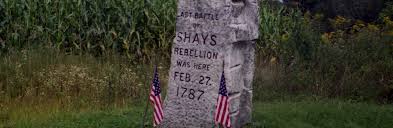
Task #1: Prepare for a class discussion by viewing the materials below. See rubric under "Evaluation."
Think about what each rebellion was about--what was at stake? why were people upset? did the rebellion work?
Watch and take notes on the following video:
Top 10 Riots of the Past 100 Years
Read and take notes on the following article from History.com:
Violent Uprisings in the United States
Task #2: With a partner or small group, divide up and read information about one of the following rebels. Take notes, discuss with your group, and then report your key findings to the class in a 1-2 minute presentation. Each person in group is responsible for a slide (including proofing own slide) and for having a speaking role. See rubric under "Evaluation."
Gallileo Galilei
William Wallace
Upton Sinclair
Corrie ten Boom
Holocaust Encyclopedia article
Harriet Beecher Stowe
Harriet Beecher Stowe Center article
Malcolm X
William Tyndale
Muhamid Ghandi
Desmond Tutu
The Desmond Tutu Peace Center article
Emily Parkhurst
Thomas Paine
Task #3: Make a list of things you would be willing to rebel for. We will be writing an essay on this topic after our webquest so give your list some careful thought.
Evaluation
Discussion Rubric
SL.10.1 Intiate and participate effectively in a range of collaborative discussions.
| 4 (100%) A | 3.5-3 (87.5%) B | 3 (75%) C | 2.5 (62.5%) D | 0 | |
|
Clear evidence of critical thinking (application, synthesis, evaluation). It is obvious you prepared in depth for the discussion. You contribute more than once. |
Good evidence of critical thinking (application, synthesis, evaluation). It is obvious you prepared for discussion. You contribute at least once. |
Basic understanding of material is shown. It seems you might have prepared for the discussion. You contribue at least once. |
Minimal evidenc of critical thinking. Repeating of others' ideas or lack of depth shown. It is not clear whether you read materials. |
No evidence of critical thinking shown. It is obvious you have not prepared for discussion. | |
| Shows respect to both teacher and other students during discussion. Is attentive and does not distract or interrupt while others speak. | No half way points! You either do or you don't |
Presentation Rubric (individual)
SL.10.6 Adapt speech to a varity of contexts and tasks.
SL.10.4 Present information, findings, and supporting evidence clearly,concisely, and logically.
SL10. Make strategic use of digital media in presentations to enhance understanding and to add interest.
| 4 (100%) A | 3.5 (87.5%) B | 3 (75%) C | 2.5 (62.5 %) D | 0 |
|
Content is accurate, thorough, and presented in a logical manner. It is obvious student has grasp of information. Effective elaboration of all key points is clear. |
Content is accurate, is generally thorough, and is presented in a logical manner. Student seems fairly comfortable with information and elaborates on key points. |
Content is accurate. Student shows basic understanding of topic and elaborates on a few points. |
Content shows some accuracy. Student does not elaborate on main points. | Content is not accurate or is incomplete. |
|
Slides follow guidelines for presentations. Slides are error free. Slides contain effective graphics that relate to text and presentation. |
Slides generally follow guidelines for presentations. Slides are mostly error free. Slides contain graphics that relate to text and presentation. |
Slides violate several rules for presenations. Slides contain several errors. Slides contain graphics that are not clearly related to text or presenation. |
Slides do not follow guidelines for presentations. Slides contain mulitple errors. Slides contain no graphics. |
|
| Speaker uses effective voice, pauses, and eye contact. | Speaker generally uses effective voice, pauses, and eye contact. | Speaker often reads off slides, at times stumbles over words, and may not speak loudly enough. | Student mumbles, uses distracting gestures, incorrectly pronounce several words, speaks too quietly, reads straight off slides, etc. | Speaker is disrespectful. |
Credits
Source URL: https://www.createwebquest.com/webquest/rebellion-webquest
Links:
[1] http://dictionary.cambridge.org/us/dictionary/american-english/rebel
[2] http://www.oxfordlearnersdictionaries.com/us/definition/english/rebel_1
[3] http://watchmojo.com/video/id/11795/
[4] http://www.history.com/news/history-lists/6-violent-uprisings-in-the-un…
[5] http://www.biography.com/people/galileo-9305220#synopsis
[6] http://www.famousscientists.org/galileo-galilei/
[7] http://www.bbc.co.uk/history/historic_figures/galilei_galileo.shtml
[8] http://www.biography.com/people/william-wallace-9522479
[9] http://www.britannica.com/biography/William-Wallace
[10] http://www.history.co.uk/biographies/william-wallace
[11] http://www.bbc.co.uk/history/historic_figures/wallace_william.shtml
[12] http://www.biography.com/people/upton-sinclair-9484897
[13] http://www.nytimes.com/ref/timestopics/topics_uptonsinclair.html
[14] http://spartacus-educational.com/Jupton.htm
[15] http://www.biography.com/people/corrie-ten-boom-21358155
[16] http://www.pbs.org/wgbh/questionofgod/voices/boom.html
[17] http://www.ushmm.org/wlc/en/article.php?ModuleId=10006914
[18] https://www.harrietbeecherstowecenter.org/hbs/
[19] http://www.history.com/topics/harriet-beecher-stowe
[20] http://www.biography.com/people/harriet-beecher-stowe-9496479
[21] http://malcolmx.com/biography/
[22] http://www.biography.com/people/malcolm-x-9396195
[23] http://www.history.com/topics/black-history/malcolm-x
[24] http://www.christianity.com/church/church-history/timeline/1501-1600/tr…
[25] http://www.bbc.co.uk/history/people/william_tyndale/
[26] http://www.christianitytoday.com/ch/131christians/scholarsandscientists…
[27] http://www.biography.com/people/mahatma-gandhi-9305898
[28] http://www.history.com/topics/mahatma-gandhi
[29] http://www.britannica.com/biography/Mohandas-Karamchand-Gandhi
[30] http://www.biography.com/people/desmond-tutu-9512516
[31] http://www.tutu.org/timeline/
[32] http://www.nobelprize.org/nobel_prizes/peace/laureates/1984/tutu-bio.ht…
[33] http://www.biography.com/people/emmeline-pankhurst-9432764#synopsis
[34] http://www.bbc.co.uk/history/historic_figures/pankhurst_emmeline.shtml
[35] http://spartacus-educational.com/WpankhurstE.htm
[36] http://www.biography.com/people/thomas-paine-9431951
[37] http://www.ushistory.org/paine/
[38] http://www.history.com/topics/american-revolution/thomas-paine
Shay's rebellion photo: https://en.wikipedia.org/wiki/Shays%27_Rebellion
German protest: https://alethonews.wordpress.com/2010/11/09/german-people-in-unpreceden…
Fist of rebellion image: http://30daystox.com/ultimate-form-rebellion/