
Introduction

"Hi there! Where's is all that rumbling coming from? We aren't on the football field! I think it is coming from that cone shaped thing over there," shouts Cartoon JJ Watt.
When Cartoon JJ Watt isn't sacking quarterbacks, he enjoys learning about other forces of nature.
Won't you join him in learning about Volcanoes today?

Task
Whoohoo! YOU have been selected to join Cartoon JJ Watt on a mission to visit different volcanoes!
While exploring these volcanoes, you will be recording facts in your scientific journal.
Some things you will learn from your expedition about each volcano studied are:
- Name and Location
- Type of Volcano
- Year of last eruption
- Height
- Other fun facts about volcanoes

Process
Before you begin your expedition you need to click here, to find out how volcanoes are formed!
Now, watch what Dr.Binocs has to tell you about volcanoes.
Since you're going to explore the different types of volcanoes, watch this video about the three types so you can get going on your quest!
- First, copy the table below into your scientific journal
- Next, click on each volcano name. This will take you to an online resource to find the location, type, year of last eruption, and height!
- Finally - record all your research in your journal. Make sure to put an "X" in the type of volcano for each example.
|
VOLCANO |
LOCATION |
COMPOSITE/ STRATOVOLCANO |
SHIELD VOLCANO |
CINDER CONE VOLCANO |
LAST ERUPTED? (YEAR) |
HEIGHT (FT) |
|
|
|
|
|
|
||
|
|
|
|
|
|
||
|
|
|
|
|
|||
|
|
|
|
|
|
||
|
|
|
|
|
|||
|
|
|
|
|
|||
|
|
|
|
|
|||
|
|
|
|
|
|||
|
|
|
|
Evaluation
Cartoon JJ Watt wants to know how you scored!
Scoring:
|
|
Perfect! |
Good Job! |
Not so Good! |
Try Again! |
|
Score: |
100 |
75-95 |
55-70 |
0-50 |
|
Comments: |
You got them all right! |
You missed a few, but you seem to have basic understanding. |
You missed quite a few. You should go back and review. |
You seem to be missing basic understanding. Start over and try again. |
Location is worth 2.5 points each. (25 points possible)
Vocano type is worth 2.5 points each. (25 points possible)
Year of last eruption is worth 2.5 points each. (25 points possible)
Height is worth 2.5 points each. (25 points possible)
Below are the correct answers:
|
VOLCANO |
LOCATION |
COMPOSITE / STRATOVOLCANO |
SHIELD VOLCANO |
CINDER CONE VOLCANO |
LAST ERUPTED (YEAR) |
HEIGHT (FT) |
|
Mt. Pinatubo |
Phillipines |
X |
|
|
1991 |
4,875 |
|
Paricutin |
Mexico |
|
|
X |
1943 |
1,353 |
|
Mount Cotopaxi |
Equador |
X |
|
|
1903 / 1904 |
19,347 |
|
Mount Saint Helens |
United States |
X |
|
|
1980 |
8,363 |
|
Mount Rainier |
United States |
X |
|
|
1894 |
13,211 |
|
Mauna Loa |
United States |
|
X |
|
1984 |
13,680 |
|
Mount Fuji |
Japan |
X |
|
|
1707 |
12,388 |
|
Mount Shasta |
United States |
X |
|
|
1786 |
14,179 |
|
Balagan-Tas |
Russia |
|
|
X |
1775 |
3,258 |
|
Mt. Etna |
Italy |
X |
|
|
ONGOING |
10,925 |
Conclusion
Way to go!
You completed this Volcano Webquest!
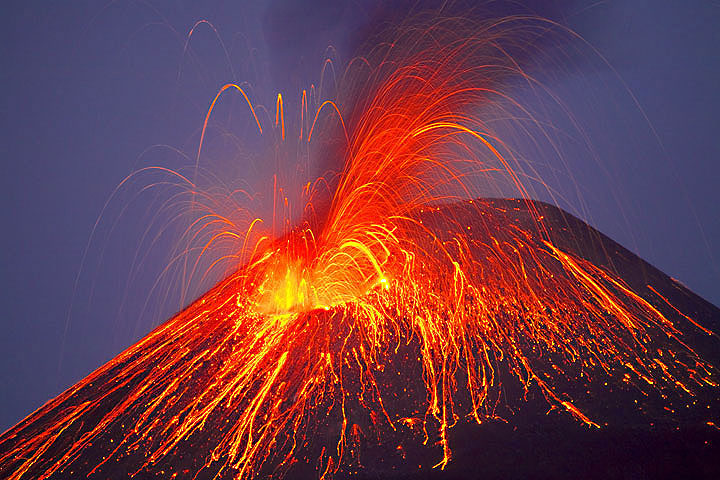
Cartoon JJ Watt wants to review what you learned:
Composite/Stratovolcanoes- Some of the Earth's grandest mountains are composite volcanoes—sometimes called stratovolcanoes. They are typically steep-sided, symmetrical cones of large dimension built of alternating layers of lava flows, volcanic ash, cinders, blocks, and bombs and may rise as much as 8,000 feet above their bases.
Cinder Cone Volcanoes- Cinder cone volcanoes are the simplest type. They are built from particles and blobs of congealed lava ejected from a single vent. As the gas-charged lava is blown violently into the air, it breaks into small fragments that solidify and fall as cinders around the vent to form a circular or oval cone. Most cinder cones have a bowl-shaped crater at the summit and rarely rise more than a thousand feet or so above their surroundings.
Shield Volcanoes- Shield volcanoes, the third type of volcano, are built almost entirely of fluid lava flows. Flow after flow pours out in all directions from a central summit vent, or group of vents, building a broad, gently sloping cone of flat, domical shape, with a profile much like that of a warrior's shield. They are built up slowly by the accretion of thousands of highly fluid lava flows calledbasalt lava that spread widely over great distances, and then cool as thin, gently dipping sheets. Lavas also commonly erupt from vents along fractures (rift zones) that develop on the flanks of the cone.
For more information on the different types of volcanoes, you can visit these links: